Naganathaswamy Temple
Naganathaswamy Temple is a Hindu temple dedicated to Rahu, located in Thirunageswaram, Thanjavur district, Tamil Nadu. It is one of the 275 Paadal Petra Sthalams — the Shiva temples glorified in the Tevaram hymns of the Nayanmar saints. On the Navagraha circuit it is the shrine of Rahu, one of the classic nine-planet pilgrimage circuit in the Kaveri delta around Kumbakonam.
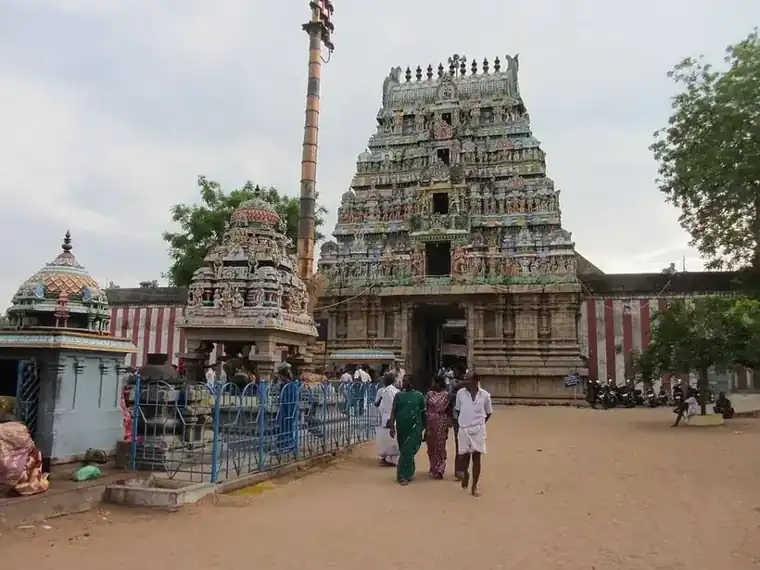
The Rahu shrine of the Navagraha circuit near Kumbakonam is famous for its noon milk abhishekam, when the milk poured over the serpent deity is seen to change colour — one of Tamil Nadu's best-known temple rituals.
About Naganathaswamy Temple
Tirunageswaram Naganathar Temple also known as Rahu Stalam is a Hindu temple dedicated to the deity Shiva, located in Tirunageswaram, a village in the outskirts of Kumbakonam, a town in Tamil Nadu, India. It is significant to the Hindu sect of Saivism as one of the temples associated with the nine planet elements, the Navagraha Stalas, and specifically Rahu. Shiva is worshiped as Naganathar, and is represented by the lingam. His consort Parvati is depicted as Piraisoodi Amman.
Legend
Thirunageswaram is one of the many temple towns in the state which is named after the grooves, clusters or forests dominated by a particular variety of a tree or shrub and the same variety of tree or shrub sheltering the presiding deity. The region is believed to have been covered with Chamapaka forest and hence called Chamapakavanam.
Many serpents, including Adishesha, Takshaka and Karkotaka, worshipped Shiva at this place, leading to the name "Tirunageswaram". As per Hindu legend, the king of snakes, Adisesha did penance at this place, called Senbaranya Kshetram on account of the presence of large number of Senbaga trees. Shiva was pleased by the penance and appeared to him. Since Shiva gave a boon to the king of Serpents, he is called Naganathar. A Goddess Girigujambal is believed to be worshipping Shiva here with goddesses Lakshmi, Saraswathi, Ganesha, Muruga, and Shasta. Maha Bhairava is still believed to be guarding and assisting the divine mother during her prayers.
Architecture and layout
The temple is located in Thirunageswaram, a panchayat town located 5 km (3.1 mi) from Kumbakonam and 47 km (29 mi) from Thanjavur on the Kumbakonam - Karaikkal highway. The temple is another masterpiece which exhibits the Chola style of architecture. It is believed to have been built by Aditya Chola I in the 10th century A.D. Later rulers have modified the temple with their own additions. The temple has a separate shrine for Rahu. The temple is located on the southern bank of the river Kaveri 7 km from Kumbakonam.
The temple covers an area of 630 ft (190 m) South-North and 800 ft (240 m) East-West with concentric sub lanes and four major streets around the four sides. There are four gateways along the four sides with entry towers (gopuram) and a surrounding compound wall. In the broad pathway on the third precinct, there is a flower garden on the northern side. The Vinayaka shrine, bali pitha, Nandikeshwara hall and flag post are located in the eastern entrance. This Ganapathy shrine is said to have been installed by the great saint Sadasiva Brahmendra along with a Ganapathy yantra. An inscription in the temple bears testimony to this fact.
Festivals and worship
The temple priests perform the pooja (rituals) during festivals and on a daily basis. Like other Shiva temples of Tamil Nadu, the priests belong to the Shaivaite community, a Brahmin sub-caste. The temple rituals are performed six times a day; Ushathkalam at 6:00 a.m., Kalasanthi at 9:00 a.m., Uchikalam at 1:00 p.m., Sayarakshai at 5:00 p.m., Irandamkalam at 7:00 p.m. and Ardha Jamam at 9:00 p.m. There is a separate calendar for the Rahu Abhishekam (sacred ablution): it is performed twice in a day at 11:30 a.m and 5:30 p.m. and additionally twice at various times in the day.
The Brahmotsvam or prime festival is celebrated for ten days in the Tamil month of Karthigai (November–December). There is a procession in silver vehicle, marriage festival of the presiding deity, another procession around the streets of Tirunageswarm in temple chariot, sanctification in temple tank and concludes with Vidayathri (farewell function) when a flower palanquin takes the images of the temple deities around the temple. The festival is celebrated amidst music with nagaswaram (pipe instrument) and tavil (percussion instrument) and religious instructions in the Vedas (sacred text) and Tevaram read by priests.
Background adapted from Wikipedia, “Tirunageswaram Naganathar Temple”, available under CC BY-SA 4.0. Edited for length; verify details locally.
Plan your visit
How to reach
Naganathaswamy Temple is roughly 253 km from Chennai, about 6.5 h by road. The nearest airport is Tiruchirappalli (TRZ), about 82 km away. Most visitors base themselves in Kumbakonam, which has the rail links and hotels, and make this a day trip. Open directions in Google Maps →
Timings: like most Tamil Nadu temples, expect an early-morning opening around 6 am, a midday closure from roughly noon to 4 pm, and evening darshan until about 8–9 pm. Festival days change everything, so confirm locally.
Today at a glance
Chennai time (IST), from our own panchangam. Nalla Neram is the good window; avoid Rahu Kalam and Yamagandam for starting a journey or a ritual.
Festival days to plan around
- The graha's own weekday — weekly
- Amavasya and Pournami — monthly
Exact dates move with the lunar calendar every year; the festival calendar lists them to 2031, and the daily panchangam shows the tithi and nakshatra for any date.
Booking.com links are affiliate links; prices are the same for you and they help keep this guide free. Day tours: temple & heritage tours from Kumbakonam.
Quick facts
| Deity | Rahu |
| Town | Thirunageswaram |
| District | Thanjavur district |
| State | Tamil Nadu |
| Sacred lists | Navagraha Temples · Paadal Petra Sthalams |
Visiting
Most temples in Tamil Nadu open early morning and again in the evening, closing through the midday hours — plan darshan before noon or after 4pm and confirm timings locally, since festival days change everything. Dress modestly (shoulders and knees covered), leave footwear at the stands provided, and note that some sanctums admit Hindus only while towers and outer courtyards welcome everyone. Photography rules vary; ask before shooting inside.
Timing a visit? Check today’s panchangam for auspicious windows and festival days, and use our free itinerary builder to slot temples, food and rest into your day.
Temples near Thirunageswaram
More Navagraha temples
Frequently asked
How far is Naganathaswamy Temple from Chennai?
About 253 km, or about 6.5 h by road. The nearest airport is Tiruchirappalli (TRZ), roughly 82 km from the temple.
What are the timings at Naganathaswamy Temple?
Most Tamil Nadu temples open around 6 am, close from about noon to 4 pm, and reopen until 8–9 pm. Festival days follow a different schedule, so confirm locally before you travel.
What should I wear?
Dress modestly with shoulders and knees covered. Footwear is left outside at the stands provided. Some inner sanctums admit Hindus only, while towers and outer courtyards welcome everyone.
When is the best time to visit Naganathaswamy Temple?
The temple is busiest and most atmospheric on its festival days: The graha's own weekday, Amavasya and Pournami. For a quiet darshan, come on a weekday morning outside festival season. Check the daily panchangam for Rahu Kalam before setting out.