Ravishwarar Temple
Ravishwarar Temple is a Hindu temple, located in Chennai, Tamil Nadu. It is among the notable temples of the Chennai region.
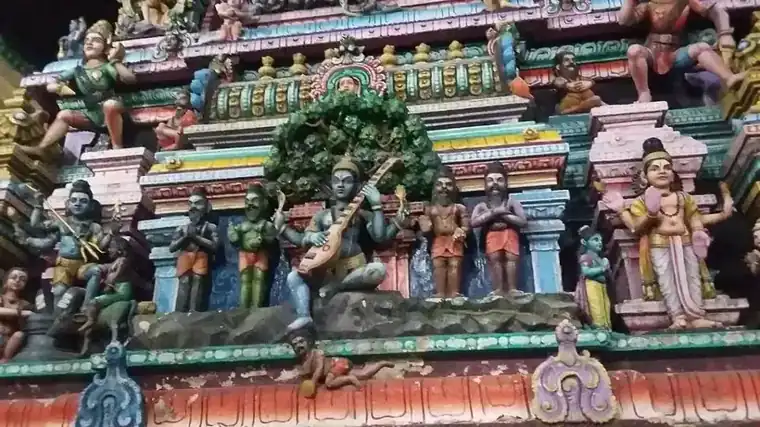
About Ravishwarar Temple
Ravishwarar Temple is a Hindu temple in Chennai, India. Built during the Chola period, the temple is dedicated to Shiva. It is located at Murthy Iyengar Street in the northern neighbourhood of Vyasarpadi.
Architecture and layout
The main deity in the temple is Lord Ravishwarar, ("Ravi" or Surya, meaning the Sun), facing east, and his consort goddess Marakadhambal, facing south. The temple has a 3-tier rajagopuram (main tower). It is said that the lord here was worshiped by the sun god. The sun god also bathed in the temple tank, known as the Bhrama Theertham or Surya Theertham, to get rid of his Bhrama Dosham (curse). The sun god is placed inside the sanctum of Lord Shiva, facing the east-facing Lord. Lord Shiva is worshiped along with the sun god. The Shiva sanctum has a Shiva Ling–shaped hole through which sunlight enters the sanctum.
The sacred tree of the temple is Vanni. Other trees in the temple includes Vilva and Naga Linga trees. Many visit the temple on Sundays to get rid of illness and to perform various pariharams.
Festivals and worship
Special days of worship in the temple include Sundays, the first days of uttharayanam and dhakshinayanam (equinoxes), Makar Sankranti (Pongal day, around the 14th of January), Rathasapthami, Aani Brahmmotsavam (June–July), Aippasi Skanda Shashti (October–November), Maasi Magham (February–March), and Panguni Utthram (March–April).
On the tenth day of the annual Navarathri events, Mahisha Vadha (killing of demon Mahisha) is celebrated, during which a plantain stem is tied in front of the goddess's sanctum, along with leaves of the Vanni tree to personify Mahisha, and is chopped to mark the event of the killing of the demon.
Background adapted from Wikipedia, “Ravishwarar Temple”, available under CC BY-SA 4.0. Edited for length; verify details locally.
Plan your visit
How to reach
The temple is inside Chennai, in Chennai. Autos, app cabs and the city's buses reach it easily; leave extra time in evening traffic. Chennai airport (MAA) is about 17 km away. Open directions in Google Maps →
Timings: like most Tamil Nadu temples, expect an early-morning opening around 6 am, a midday closure from roughly noon to 4 pm, and evening darshan until about 8–9 pm. Festival days change everything, so confirm locally.
Today at a glance
Chennai time (IST), from our own panchangam. Nalla Neram is the good window; avoid Rahu Kalam and Yamagandam for starting a journey or a ritual.
Booking.com links are affiliate links; prices are the same for you and they help keep this guide free. Day tours: temple & heritage tours from Chennai.
Quick facts
| Deity | — |
| Town | Chennai |
| District | Chennai district |
| State | Tamil Nadu |
| Sacred lists | Chennai Temples |
Visiting
Most temples in Tamil Nadu open early morning and again in the evening, closing through the midday hours — plan darshan before noon or after 4pm and confirm timings locally, since festival days change everything. Dress modestly (shoulders and knees covered), leave footwear at the stands provided, and note that some sanctums admit Hindus only while towers and outer courtyards welcome everyone. Photography rules vary; ask before shooting inside.
Timing a visit? Check today’s panchangam for auspicious windows and festival days, and use our free itinerary builder to slot temples, food and rest into your day.
Temples near Chennai
More Chennai temples
Frequently asked
Where is Ravishwarar Temple?
Ravishwarar Temple is in Chennai, within Chennai city. It is reachable by auto, app cab or city bus; Chennai airport is about 17 km away.
What are the timings at Ravishwarar Temple?
Most Tamil Nadu temples open around 6 am, close from about noon to 4 pm, and reopen until 8–9 pm. Festival days follow a different schedule, so confirm locally before you travel.
What should I wear?
Dress modestly with shoulders and knees covered. Footwear is left outside at the stands provided. Some inner sanctums admit Hindus only, while towers and outer courtyards welcome everyone.