Marundeeswarar Temple
Marundeeswarar Temple is a Hindu temple dedicated to Lord Shiva, located in Chennai, Tamil Nadu. It is one of the 275 Paadal Petra Sthalams — the Shiva temples glorified in the Tevaram hymns of the Nayanmar saints.
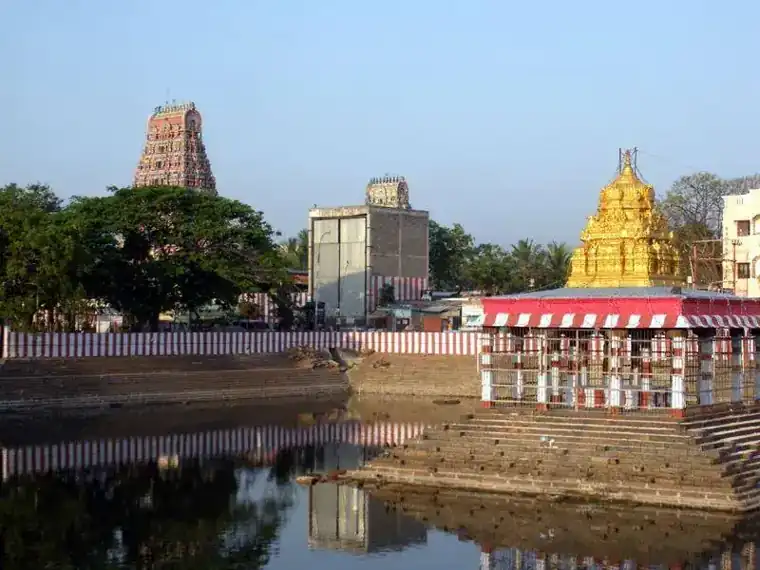
The Thiruvanmiyur seashore temple of Shiva as the Lord of Medicine has drawn health-seekers for centuries — its very name means 'god of remedies'. It is one of the Paadal Petra Sthalams sung by the Nayanmars, and its tank and gopurams anchor south Chennai's coastline.
About Marundeeswarar Temple
Marundeeswarar Temple is a temple dedicated to Hindu deity Shiva, located in Thiruvanmiyur, Chennai adjacent to the beach of Bay of Bengal. It is one of the 275 Paadal Petra Sthalams where two of the most revered Nayanars (Saivite Saints), Appar and Tirugnana Sambandar, have glorified the temple with their verses during the 7th century CE. The temple has been widely expanded by Chola kings during the 11th century CE. The temple has two seven-tiered gateway towers, a huge tank, with the overall temple area covering 1 acre.
Legend
Marundeeswarar is known so because he imparted sage Agastya on curative properties of various herbs and plants. Since then the Marundeeswarar temple has been a place of worship for people with diseases and various problems with their health. It is said that sage Valmiki, who wrote Ramayana, worshiped Shiva in the temple. Since Valmiki was blessed here, the place was to be known as Thiruvalmikiyur, which is pronounced as 'Thiruvanmikiyur' in Tamil, the name gradually changed to Thiruvanmiyur. There is a place present in Thiruvanmiyur called Valmiki Nagar in his honour.
History
The road starting from Marundeeswarar temple, now called ECR was an important route during the Chola period and was known as Vadagaperuvazhi, connecting the kingdom to places in Thanjavur and Andhra Pradesh. Inscriptions can be found in the shrine of Tripurasundari Amman dating back to the 11th century during the period of Rajendra Chola. The origins and antiquity of this temple is corroborated by the inscriptions found in other temples in the city namely Kapaleeswarar Temple, Virupaksheeswarar Temple and Thiruvidandai which bear testimony to Tiruvanmiyur's existence. A new life has been put into this ancient worshipping place, first in the year 1903 and then in the 1970s.
Architecture and layout
The temple is believed to have partial feature of Pallava dynasty and partially with Chola art. The temple has two entrances, one from East Coast Road and the other from West Tank Street both adorned by 5-tiered gopuram (gateway tower). The Entrance from the West Tank Street has got three gates whereas the entrance from the East Coast Road has only one gate. The temple occupies an area of about 1 acre – numerous images adorn the pillars of the temple, while stucco figures adorn the gopurams. The mandapam (hall) housing the Somaskanda form of Shiva has 36 massive pillars adorned with carvings.
The temple has smaller shrines for Ganesha, Murugan, there is a shine for 3 Ganeshas who control all three time periods, adjacent to this a vedagama padasalai is situated. The shiva linga is a swayambu (or a natural formation and not built like Kapaleeshwara temple at Mylapore). Hence pure cows milk alone is used for abhishekam. A Thirumurai mandapam has been set up in which Tirumurai are sung daily for the past 11 years. The shrine of Shiva, which has the idols of Shiva in his three forms, Tyagaraja, Marundeeswarar, and Nataraja. The last shrine is for Marundeeswarar's consort, Goddess Tripura Sundari, who is actually Goddess Parvati.
Background adapted from Wikipedia, “Marundeeswarar Temple”, available under CC BY-SA 4.0. Edited for length; verify details locally.
Plan your visit
How to reach
The temple is inside Chennai, in Chennai. Autos, app cabs and the city's buses reach it easily; leave extra time in evening traffic. Chennai airport (MAA) is about 10 km away. Open directions in Google Maps →
Timings: like most Tamil Nadu temples, expect an early-morning opening around 6 am, a midday closure from roughly noon to 4 pm, and evening darshan until about 8–9 pm. Festival days change everything, so confirm locally.
Today at a glance
Chennai time (IST), from our own panchangam. Nalla Neram is the good window; avoid Rahu Kalam and Yamagandam for starting a journey or a ritual.
Festival days to plan around
This temple's own festivals: Panguni Brahmmotsavam in March- April, Shivrathri in February–March.
- Maha Shivaratri — February–March
- Pradosham — twice a month, evening
- Arudra Darshan — December–January
- Karthigai Deepam — November–December
Exact dates move with the lunar calendar every year; the festival calendar lists them to 2031, and the daily panchangam shows the tithi and nakshatra for any date.
Booking.com links are affiliate links; prices are the same for you and they help keep this guide free. Day tours: temple & heritage tours from Chennai.
Quick facts
| Deity | Shiva |
| Town | Chennai |
| District | Chennai district |
| State | Tamil Nadu |
| Sacred lists | Chennai Temples · Paadal Petra Sthalams |
Visiting
Most temples in Tamil Nadu open early morning and again in the evening, closing through the midday hours — plan darshan before noon or after 4pm and confirm timings locally, since festival days change everything. Dress modestly (shoulders and knees covered), leave footwear at the stands provided, and note that some sanctums admit Hindus only while towers and outer courtyards welcome everyone. Photography rules vary; ask before shooting inside.
Timing a visit? Check today’s panchangam for auspicious windows and festival days, and use our free itinerary builder to slot temples, food and rest into your day.
Temples near Chennai
More Chennai temples
Frequently asked
Where is Marundeeswarar Temple?
Marundeeswarar Temple is in Chennai, within Chennai city. It is reachable by auto, app cab or city bus; Chennai airport is about 10 km away.
What are the timings at Marundeeswarar Temple?
Most Tamil Nadu temples open around 6 am, close from about noon to 4 pm, and reopen until 8–9 pm. Festival days follow a different schedule, so confirm locally before you travel.
What should I wear?
Dress modestly with shoulders and knees covered. Footwear is left outside at the stands provided. Some inner sanctums admit Hindus only, while towers and outer courtyards welcome everyone.
When is the best time to visit Marundeeswarar Temple?
The temple is busiest and most atmospheric on its festival days: Maha Shivaratri, Pradosham, Arudra Darshan. For a quiet darshan, come on a weekday morning outside festival season. Check the daily panchangam for Rahu Kalam before setting out.