Mallikesvarar Temple
Mallikesvarar Temple is a Hindu temple, located in Chennai, Tamil Nadu. It is among the notable temples of the Chennai region.
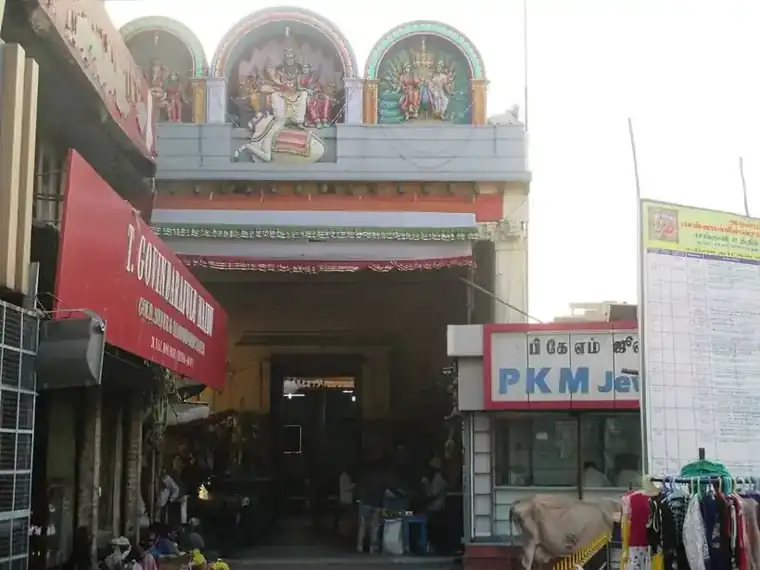
About Mallikesvarar Temple
Mallikesvarar Temple (Tamil: மல்லிகேஸ்வரர் திருக்கோவில்) or Mallikarjunar Temple (Tamil: மல்லிகார்ஜுனர் திருக்கோவில்) is a Hindu temple situated in the neighbourhood of George Town in the city of Chennai, India. It is one of the first Hindu temples to be constructed in the British settlement of Madrasapatnam. There is the nearby Chenna kesava perumal Temple. They are twin temples. This is also called Chenna Malleeswarar temple. Chenna pattanam may be named after this deities. The word 'chenni' in Tamil means face, and the temple was regarded as the face of the city.
History
According to Srinivasan, T.A The Original twin temples' (Chenna kesava perumal and Chenna Malleeswarar) location was later occupied by the High court building. The original twin temples' history dates back to 1646 CE. Grants made to the original twin temples by Nagabattar and Thimmappar were recorded. Attack by other European powers and attack and looting of temples by Hyder Ali's forces caused the devotees to relocate some vigrahams to the Thiruneermalai Temple. The twin temples were demolished by the British, for the purpose of security and expansion of the nearby Fort St.George.
According to the official Chenna Kesava temple website: "The original Chenna kesava perumal Temple was located even in the 17th century AD in the place where the Madras High Court is currently located. When the original temple was present, there were a lot of problems in Chennai such as invasion by French and Tippu Sultan. The British East India Company demolished the original temple in 1757 AD. Due to public outcry, the East India Company donated land and some money to Manali Muthu krishna Mudaliar, who built the new Chenna Kesava Perumal temple in the year of 1762, at a different location i.e.
Background adapted from Wikipedia, “Mallikesvarar Temple”, available under CC BY-SA 4.0. Edited for length; verify details locally.
Plan your visit
How to reach
The temple is inside Chennai, in Chennai. Autos, app cabs and the city's buses reach it easily; leave extra time in evening traffic. Chennai airport (MAA) is about 15 km away. Open directions in Google Maps →
Timings: like most Tamil Nadu temples, expect an early-morning opening around 6 am, a midday closure from roughly noon to 4 pm, and evening darshan until about 8–9 pm. Festival days change everything, so confirm locally.
Today at a glance
Chennai time (IST), from our own panchangam. Nalla Neram is the good window; avoid Rahu Kalam and Yamagandam for starting a journey or a ritual.
Booking.com links are affiliate links; prices are the same for you and they help keep this guide free. Day tours: temple & heritage tours from Chennai.
Quick facts
| Deity | — |
| Town | Chennai |
| District | Chennai district |
| State | Tamil Nadu |
| Sacred lists | Chennai Temples |
Visiting
Most temples in Tamil Nadu open early morning and again in the evening, closing through the midday hours — plan darshan before noon or after 4pm and confirm timings locally, since festival days change everything. Dress modestly (shoulders and knees covered), leave footwear at the stands provided, and note that some sanctums admit Hindus only while towers and outer courtyards welcome everyone. Photography rules vary; ask before shooting inside.
Timing a visit? Check today’s panchangam for auspicious windows and festival days, and use our free itinerary builder to slot temples, food and rest into your day.
Temples near Chennai
More Chennai temples
Frequently asked
Where is Mallikesvarar Temple?
Mallikesvarar Temple is in Chennai, within Chennai city. It is reachable by auto, app cab or city bus; Chennai airport is about 15 km away.
What are the timings at Mallikesvarar Temple?
Most Tamil Nadu temples open around 6 am, close from about noon to 4 pm, and reopen until 8–9 pm. Festival days follow a different schedule, so confirm locally before you travel.
What should I wear?
Dress modestly with shoulders and knees covered. Footwear is left outside at the stands provided. Some inner sanctums admit Hindus only, while towers and outer courtyards welcome everyone.