Ranganathaswamy Temple
Ranganathaswamy Temple is a Hindu temple where the presiding deities are Ranganathaswamy Perumal and Ranganayaki Thayar, located in Srirangam, Trichy district, Tamil Nadu. It is temple #1 in the traditional order of the 108 Divya Desams — the 108 Vishnu shrines praised in the Naalayira Divya Prabandham of the Alvar saints.
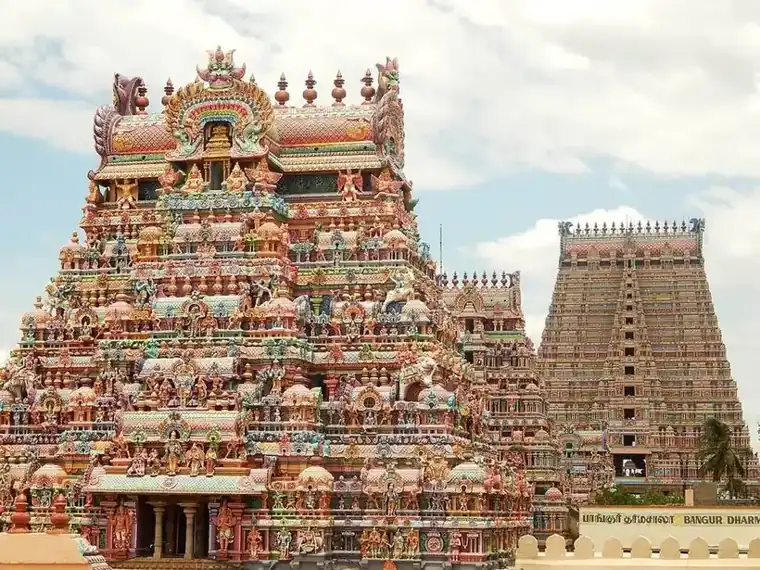
Srirangam is the grandest of all Vishnu temples and is often described as the largest functioning temple complex in the world, an island city of seven concentric walled enclosures on the Kaveri. Its annual Vaikunta Ekadashi festival draws enormous crowds through the celebrated Paramapada Vasal, the gateway of heaven.
About Ranganathaswamy Temple
The Ranganathaswamy Temple, also known as Arulmigu Ranganathar Thirukovil, is a Hindu temple dedicated to Ranganathar (a form of Vishnu) and his consort Ranganayaki (a form of Lakshmi). The temple is located in Srirangam, Tiruchirappalli, Tamil Nadu, India. Constructed in the Tamil architectural style, the temple is glorified by the Tamil poet-saints called the Alvars in their canon, the Naalayira Divya Prabhandham, and has the unique distinction of being the foremost among the 108 Divya Desams dedicated to the god Vishnu.
Legend
The temple and its artwork are a subject of numerous different Tamil legends covered in regional Puranic texts. Sriranga Mahatmyam, for example, is one of the compilations of the temple mythology about its origins. According to it, Brahma was performing austerities during the Samudra Manthana (churning of cosmic ocean), and Srirangam Vimanam emerged as a result. It remained in Satyaloka for ages, and was brought to Ayodhya by king Ikshvaku. After Rama, an avatar of Vishnu, had killed the evil demon Ravana, he gave it to King Vibhishana, who wanted to be with Rama.
As per another legend, Sanaka, the four child sages, came for a darshana of Ranganatha in Srirangam. They were stopped by Jaya and Vijaya, the guardians of Vaikuntha. In spite of their pleadings, they were refused entry. In anger, all four of them cursed the guardians in one voice and left. The guardians approached Vishnu and told him about the curse. Ranganatha said that he would not be able to reverse the curse and gave them two options: be born as demons opposing Vishnu in three births or good human beings in the following seven births.
History
The main deity of the temple is mentioned in various Sanskrit literature and epics such as the Ramayana, Mahabharata, Padma Purana, Brahmanda Purana and Garuda Puranam. There are mentions even in the Tamil literature of the Sangam era (300 BCE to the 300 CE), there are mentions in many books like Akanaṉūṟu, Purananuru, Paripāṭal and Silapadikaram. Example:- Silapadikaram (book 11, lines 35–40):
The temple was first built by the Chola ruler, Dharmavarma. The Kaveri river flood destroyed the temple vimanam, and later, the early Cholas King Killivalavan rebuilt the temple complex that is present today. There are many mandapas which were built near the main sanctum sanctorum which dates around 100 CE to 300 CE built by Uraiyur Cholas. There were later additions of structures and inscriptions in the temple which belong to the Chola, Pandya, Hoysala, Marathas and Vijayanagara dynasties who ruled over the region. These inscriptions range in date between the 7th and 17th centuries.
Architecture and layout
The temple is enclosed by seven concentric enclosures with courtyards (termed prakarams or mathil suvar). Each layer has walls and gopurams, which were built or fortified in and after the 16th century. These walls total 32,592 feet (9,934 m) or over six miles. The temple has 17 major gopurams (towers, 21 total), 39 pavilions, 50 shrines, nine sacred water pools, Ayiram kaal mandapam (a hall of 1000 pillars) and several small water bodies inside.
The temple is aligned to the north–south and east–west axis, on an island surrounded by the Kaveri River. The river has long been considered sacred, and called the Daksina Ganga or the "Ganges of the South". The outer two prakarams (outer courtyard) are residential and markets with shops, restaurants and flower stalls. The five inner courtyards have shrines to Vishnu and his various avatars such as Rama and Krishna. Major shrines are additionally dedicated to goddess Lakshmi and many saints of Vaishnavism.
Background adapted from Wikipedia, “Ranganathaswamy Temple, Srirangam”, available under CC BY-SA 4.0. Edited for length; verify details locally.
Plan your visit
How to reach
Ranganathaswamy Temple is roughly 301 km from Chennai, about 8 h by road. The nearest airport is Tiruchirappalli (TRZ), about 11 km away. Most visitors base themselves in Tiruchirappalli, which has the rail links and hotels, and make this a day trip. Open directions in Google Maps →
Timings: like most Tamil Nadu temples, expect an early-morning opening around 6 am, a midday closure from roughly noon to 4 pm, and evening darshan until about 8–9 pm. Festival days change everything, so confirm locally.
Today at a glance
Chennai time (IST), from our own panchangam. Nalla Neram is the good window; avoid Rahu Kalam and Yamagandam for starting a journey or a ritual.
Festival days to plan around
- Vaikunta Ekadasi — December–January
- Krishna Jayanthi — August–September
- Sri Rama Navami — March–April
- Purattasi Saturdays — September–October
Exact dates move with the lunar calendar every year; the festival calendar lists them to 2031, and the daily panchangam shows the tithi and nakshatra for any date.
Booking.com links are affiliate links; prices are the same for you and they help keep this guide free. Day tours: temple & heritage tours from Tiruchirappalli.
Quick facts
| Deity | Ranganathaswamy Perumal and Ranganayaki Thayar |
| Town | Srirangam |
| District | Trichy district |
| State | Tamil Nadu |
| Sacred lists | 108 Divya Desams |
| Divya Desam # | 1 |
Visiting
Most temples in Tamil Nadu open early morning and again in the evening, closing through the midday hours — plan darshan before noon or after 4pm and confirm timings locally, since festival days change everything. Dress modestly (shoulders and knees covered), leave footwear at the stands provided, and note that some sanctums admit Hindus only while towers and outer courtyards welcome everyone. Photography rules vary; ask before shooting inside.
Timing a visit? Check today’s panchangam for auspicious windows and festival days, and use our free itinerary builder to slot temples, food and rest into your day.
Temples near Srirangam
More Divya Desam temples
Frequently asked
How far is Ranganathaswamy Temple from Chennai?
About 301 km, or about 8 h by road. The nearest airport is Tiruchirappalli (TRZ), roughly 11 km from the temple.
What are the timings at Ranganathaswamy Temple?
Most Tamil Nadu temples open around 6 am, close from about noon to 4 pm, and reopen until 8–9 pm. Festival days follow a different schedule, so confirm locally before you travel.
What should I wear?
Dress modestly with shoulders and knees covered. Footwear is left outside at the stands provided. Some inner sanctums admit Hindus only, while towers and outer courtyards welcome everyone.
When is the best time to visit Ranganathaswamy Temple?
The temple is busiest and most atmospheric on its festival days: Vaikunta Ekadasi, Krishna Jayanthi, Sri Rama Navami. For a quiet darshan, come on a weekday morning outside festival season. Check the daily panchangam for Rahu Kalam before setting out.