Meenakshi Temple
Meenakshi Temple is a Hindu temple dedicated to Lord Shiva, located in Madurai, Tamil Nadu. It is one of the 275 Paadal Petra Sthalams — the Shiva temples glorified in the Tevaram hymns of the Nayanmar saints.
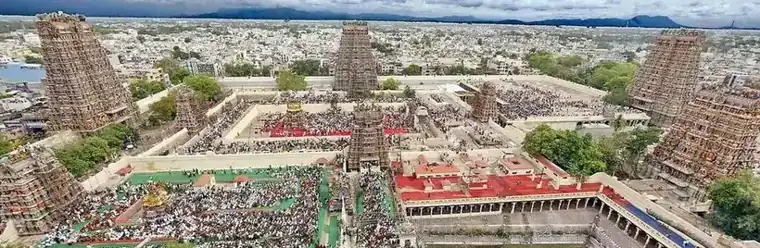
The Meenakshi Amman temple defines Madurai: a city-within-a-city of towering painted gopurams, thousand-pillared halls and ancient market streets that grew around it. Dedicated jointly to Meenakshi (Parvati) and Sundareswarar (Shiva), it is one of India's most spectacular living temples, and its shrine of Shiva as Sokkanathar is sung in the Tevaram.
About Meenakshi Temple
Meenakshi Temple, also known as Meenakshi Sundareswarar Temple, is a historic Hindu temple located on the southern bank of the Vaigai River in Madurai, Tamil Nadu, India. It is dedicated to Meenakshi, a form of Parvati, and her consort Sundareswarar (Shiva). The temple is theologically significant as it represents a confluence of various denominations of Hinduism such as Shaivism, Shaktism, and Vaishnavism.
Legend
According to the 16th century CE Tamil text of Thiruvilaiyadal Puranam, king Malayadhwaja Pandya and his wife Kanchanamalai performed a yajna seeking a son to succeed the king. A daughter appeared out of the fire, who was three years old and had three breasts. When the parents prayed to Shiva, a divine voice advised them to bring up the child, and that she will lose the third breast when she meets her future husband. The girl grew up in the palace, and the king crowned her as his successor.
According to religious scholar William P. Harman, the story may reflect the matrilineal traditions prevalent in South India during the time and the regional beliefs that "[spiritual] powers rest with the women", gods listen to their spouse, and that the fates of kingdoms rest with the women. He notes:
History
The town of Madurai is described from the Sangam era texts, dated to 1st to 4th century CE. Tamil texts imply that a temple existed in Madurai by the mid-6th century. As per these texts, the town of "Koodal" (Madurai) is described as a temple town where every street radiated from the temple. In the Teveram texts, the temple and its deity are referred to by various epithets and names. In Campantar describes the deity as Aalavaai Iraivan. In early medieval literature and inscriptions, it is sometimes referred to as Kadambavanam as the region was covered with Kadamba trees.
During the rule of the Pandya dynasty, goddess Meenakshi is described as the divine ruler of Madurai, who along with Shiva were revered as the primary deities. The earliest of the existing masonry of the Meenakshi temple was built during the reign of the Pandya emperor Sadayavarman Kulasekaran I (r. 1190–1216). The gopuram at the entrance of the Sundareswarar shrine and the central portion of the Meenakshi shrine were built during his reign.
Architecture and layout
The Meenakshi temple is located in the heart of Madurai, on the southern bank of the Vaigai River. The Nayak rulers followed the Shilpa Shastras, Hindu texts on architecture, in designing the temple and the city. The roads radiating from the temple complex, form a concentric pattern around the temple. The streets and junctions are named after months of the Tamil Calendar, originating from the practice of starting the temple procession from the spots corresponding to the respective months. The temple and the city were designed to face east, to face the Sun in the morning.
The main shrines are located in the center of the temple complex, surrounded by various monuments inside concentric prakarams (enclosures). The enclosures are fortified with high masonry walls, with the outer walls having four towering gopurams (gateways), one each on either direction, which allow people to enter the complex from all four directions. The temple corridors and streets are used for accommodating elaborate processions during the festivals, and the temple cars used in the processions are progressively more massive the further they travel from the centre. The temple is surrounded by shops and traditional markets along the surrounding streets.
Background adapted from Wikipedia, “Meenakshi Temple”, available under CC BY-SA 4.0. Edited for length; verify details locally.
Plan your visit
How to reach
Meenakshi Temple is roughly 423 km from Chennai, about 11 h by road. The nearest airport is Madurai (IXM), about 10 km away. Open directions in Google Maps →
Timings: like most Tamil Nadu temples, expect an early-morning opening around 6 am, a midday closure from roughly noon to 4 pm, and evening darshan until about 8–9 pm. Festival days change everything, so confirm locally.
Today at a glance
Chennai time (IST), from our own panchangam. Nalla Neram is the good window; avoid Rahu Kalam and Yamagandam for starting a journey or a ritual.
Festival days to plan around
- Navaratri — September–October
- Aadi Fridays and Aadi Pooram — July–August
- Thai Fridays — January–February
- Panguni Uthiram — March–April
Exact dates move with the lunar calendar every year; the festival calendar lists them to 2031, and the daily panchangam shows the tithi and nakshatra for any date.
Booking.com links are affiliate links; prices are the same for you and they help keep this guide free. Day tours: temple & heritage tours from Madurai.
Quick facts
| Deity | Shiva |
| Town | Madurai |
| District | Madurai district |
| State | Tamil Nadu |
| Sacred lists | Paadal Petra Sthalams |
Visiting
Most temples in Tamil Nadu open early morning and again in the evening, closing through the midday hours — plan darshan before noon or after 4pm and confirm timings locally, since festival days change everything. Dress modestly (shoulders and knees covered), leave footwear at the stands provided, and note that some sanctums admit Hindus only while towers and outer courtyards welcome everyone. Photography rules vary; ask before shooting inside.
Timing a visit? Check today’s panchangam for auspicious windows and festival days, and use our free itinerary builder to slot temples, food and rest into your day.
Temples near Madurai
More Paadal Petra Sthalam temples
Frequently asked
How far is Meenakshi Temple from Chennai?
About 423 km, or about 11 h by road. The nearest airport is Madurai (IXM), roughly 10 km from the temple.
What are the timings at Meenakshi Temple?
Most Tamil Nadu temples open around 6 am, close from about noon to 4 pm, and reopen until 8–9 pm. Festival days follow a different schedule, so confirm locally before you travel.
What should I wear?
Dress modestly with shoulders and knees covered. Footwear is left outside at the stands provided. Some inner sanctums admit Hindus only, while towers and outer courtyards welcome everyone.
When is the best time to visit Meenakshi Temple?
The temple is busiest and most atmospheric on its festival days: Navaratri, Aadi Fridays and Aadi Pooram, Thai Fridays. For a quiet darshan, come on a weekday morning outside festival season. Check the daily panchangam for Rahu Kalam before setting out.